From early petroglyphs to a flourishing network of ethnic paintings of unique styles, India’s vibrant artistic heritage reflects the culture passed down through generations. The kaleidoscopes of dazzling colours and a maze of enchanting patterns and textures give the antique art a sense of vintage nostalgia. They mainly emphasize originality and simplicity, with themes as diverse as the Indian culture.

Traditional Mithila Art
Source – Geethanjali Creations
Mithila Art is one of the most prevalent Indian folk arts at present. Originating from the Mithila region of Bihar, this art of Mithila embodies a unique blend of comprehension, cultural knowledge, and iconography. It is done with fingers, brushes, nip pens, and vibrant organic colours. The painting is filled with symbolism in the form of motifs. Fishes signify prosperity, while birds signify peace. Peacocks represent new growth, while the trees are meant to personify life and fertility. Modern Mithila paintings can also be found on sarees, stoles, handbags, etc.

Pattachitra Painting
Artist – Neerja Tata
Another traditional art form of India is the Pattachitra. It is a contemporary cloth-based scroll painting, majorly prevalent in the states of Odisha and West Bengal. Palm leaves are dried and stitched. Foldable panels are made out of them. Painting on them with traditional natural colours results in remarkable paintings. One unique feature of this art is that it does not leave room for errors. If an error is made, the entire panel has to be replaced.
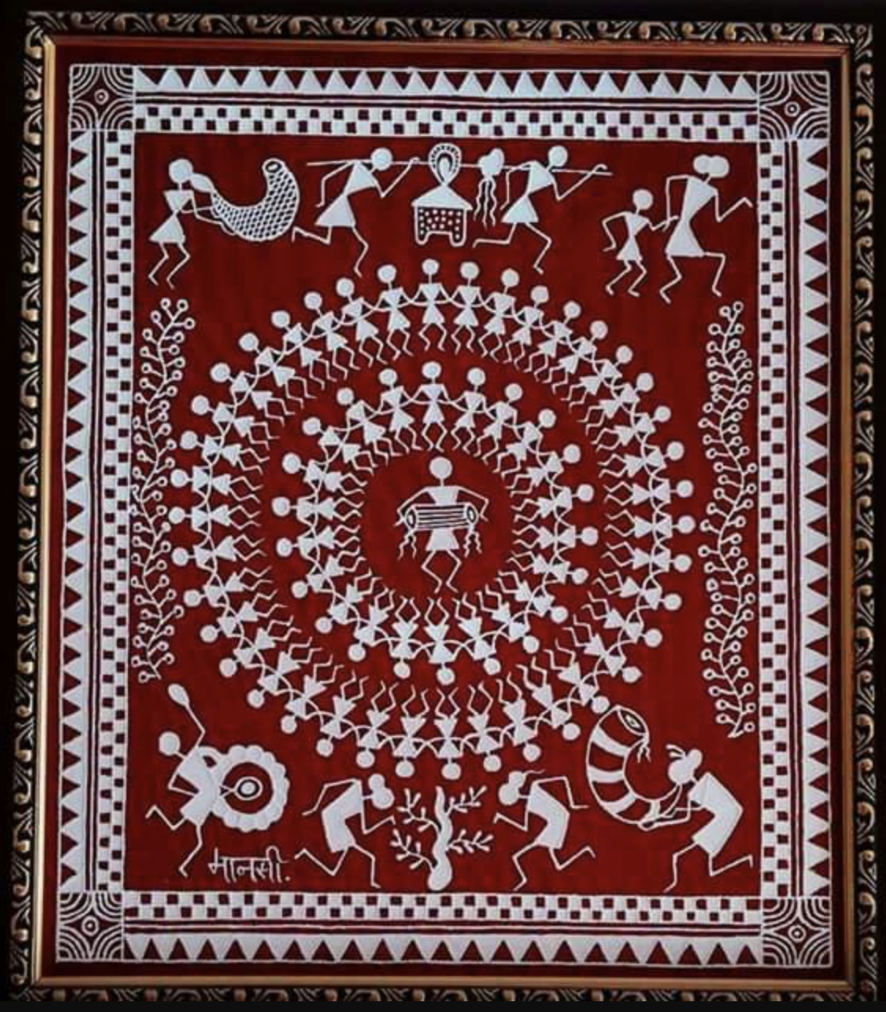
Warli Art
Artist – Mansi
The Warli Art of the Sahyadri region revolves around the concept of the dependency of humans on nature. Clay huts are used as backdrops for these paintings. The paintings consist of geometric shapes representing nature elements and depict activities and relations between community members. In short, this art is a fascinating fusion of symbolism, simplicity, and beauty.

Chittara Art
Source – Ruby Articrafts
The folk art of Karnataka, Chittara, is murals painted on red-coated mud walls of houses. Every line in the painting is symbolic and collectively portrays important community events. They are also used to represent auspicious ceremonies of life. Natural elements like ground rice paste (white colour) and roasted rice (black colour) are used to transform the process into a source of beauty, joy, and creativity.
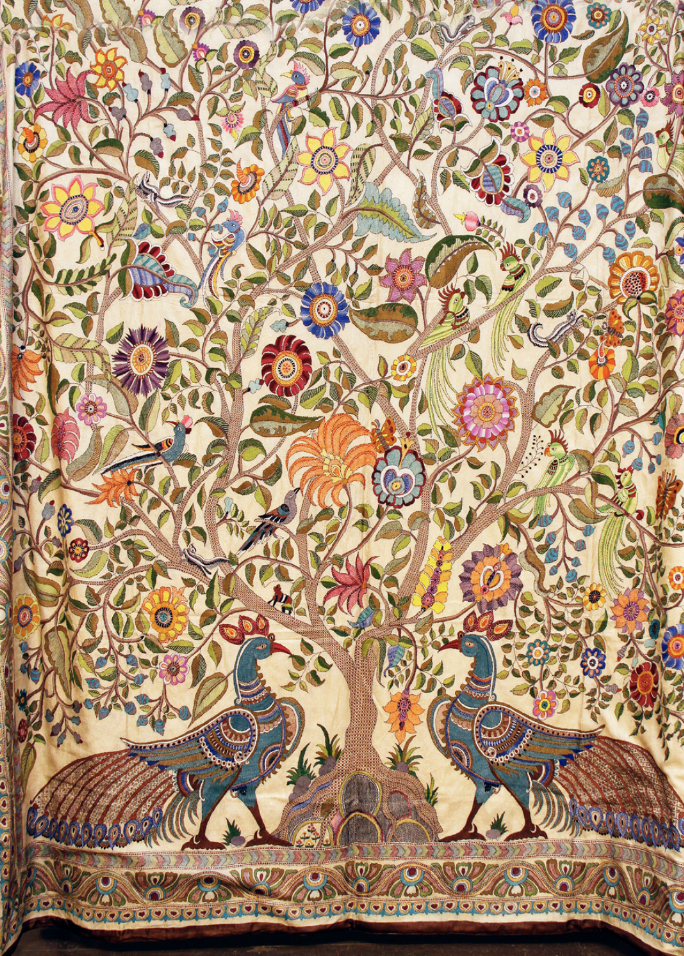
Kalamkari Painting
Source – Padma Shri J. Gurappa Chetty
Literally translating to pen work, the art form of Kalamkari originated from the states of Andhra Pradesh and Telangana. It involves painting using natural vegetable dyes on cotton or silk fabric with various forms of pens. The process involves about 23 steps such as dyeing, bleaching, hand painting, block printing, starching, cleaning, and more. The art favours the absence of vibrance due to the use of more earthy colours. In the present time, kalamkari art on sarees is extremely popular.

Kalighat Painting
Artist- Jamini Roy
The Kalighat painting style was developed in the vicinity of Kalighat Kali Temple in Calcutta. They depict scenes of everyday life and mythological deities in a captivating manner. A distinguishing feature of this style is the seamless and free-flowing outline. They are known to be monumental in their presentation on paper. India is home to more than 100 types of folk arts, each having its own distinctive style influenced by the history, sociology, and geography of the region they originated in. All the art forms are infused with pleasing simplicity and beauty. The illustrations preserve the rich cultural heritage of the country. The symbolism ingrained in the illustrations is instrumental in spreading ethnic and philosophical ideas along with social values.
~ By Soumya Sangam Jha, Second Year Department of Information Technology