Cancer is among the leading causes of death worldwide. In 2012, there were 14.1 million new cases and 8.2 million cancer-related deaths worldwide. First let us answer two important questions about cancer and then see how engineering can help solve this biological problem.
Why is cancer risk increasing?
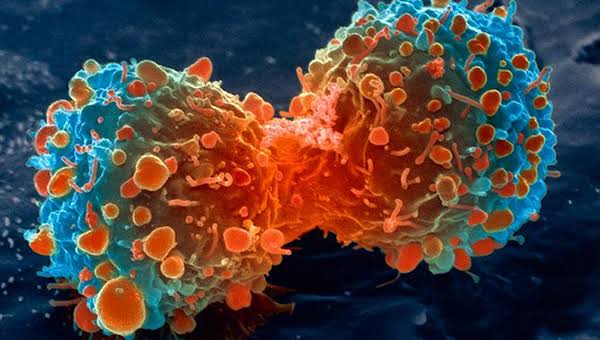
We all know that cancer is the uncontrolled growth of cells. Half of us will hear the words “you have cancer” at some point of our lives. That’s right, the latest estimate says that 1 in 2 people are diagnosed with cancer during their lifetime. But cancer is nothing new. Tumours have been found in dinosaur fossils. The oldest cancer found in human ancestor was in a 1.7 million years old bone. But why is the risk increasing? The answer is, simply because most of us are living longer.
Cancer is a disease of our genes- the bits of DNA code that hold the instructions for all of the microscopic machinery inside our cells. While duplicating itself, mistakes of the order of 1 in a million base pairs happen. However, a single mutation cannot cause cancer, it is caused by the accumulation of detrimental variation of the genome. Better medical facilities continue to increase life expectancy. And the longer we live, the more time we have for these errors to build up.
Why is it so hard to cure cancer?
There is no single cure for cancer because cancer is not a single disease. The word “cancer” is an umbrella term that includes hundreds of different diseases. The fact that there is no foreign agent attacking the body makes the task all the more difficult. Cancer cells are your cells. How do you design a drug that kills some particular cells? You have to find a unique difference between cancer cell and all other types of cells in the body. And if you can do that for one particular variant of cancer, you now have to solve the same problem for hundreds of other kinds of cancer, because each cancer is a unique genetic variant of a unique tissue cell.
How can engineering contribute?
Traditionally, cancer research was an area for oncologists and scientists. In the recent past, the world has realized that engineering can contribute significantly to understanding, detecting and treating cancer. Engineering has not only enhanced the clinical methods, but also opened up innovative ways. Advanced imaging technology is an obvious way to improve diagnosis. Radiotherapy and surgery are the keystones of successful treatment of cancer and recent advances in proton beam therapy and surgical robotics are now improving patient outcomes. On the near horizon are technologies such as metabolic sensing of surgical resection margins with an intelligent scalpel -the iKnife- that uses in situ mass spectrometry to analyse patient tissue. Engineered nanoparticles can trigger the immune response to fight cancer. They can also deliver drug therapies into places that are beyond the reach of normal drugs. Nanoparticles can attack cancer at its root by silencing cancer genes. Complex interactions within biological systems are analyzed in the field of Systems Biology. Mathematical models enable computer engineers to design, test and screen potential drug candidates entirely on computers (termed as ‘in silico’). Hence, mechanical, chemical, materials, biomedical, electrical and computer engineers have the potential to be the future of cancer research.
– Deeksha Hegde