Three of the Big Five Tech Companies have Embraced Microservices, Why?
“Microservices” – yet another new term that in recent years, has transformed the world of software architecture. It is a term very popular in the world of software development nowadays, which surprisingly many aren’t aware of, that describes a style of software systems that we are finding more and more appealing. Big names such as Netflix, Uber, Spotify, PayPal and many more have adopted this style of software architecture to bring an unprecedented level of control and speed as they deliver innovative web experiences to customers. The microservice architecture brings stability, easy scalability, availability and dependability to the ever growing complex architectures that these companies have.
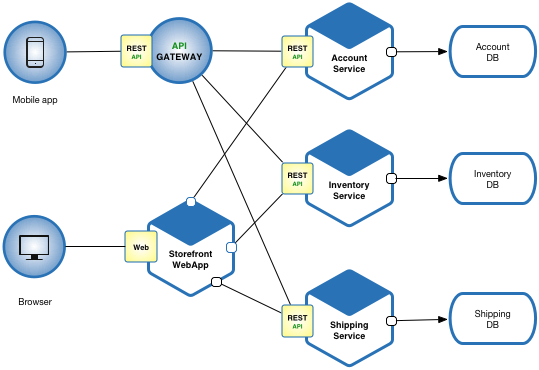
Microservices vs Monolithic architecture
Monolithic and microservice oriented are two types of architectures that applications are based on. In the following section we discuss the key differences between each of these architectures and highlight the advantages that microservies has over the traditional monoliths.
Monolithic architecture is the traditional form of developing applications. It is built as a single, indivisible unit. It consists of a large common codebase, that all developers work on, and as a result, these usually end being very complex with the lack of a single person who understands the application as a whole. Another effect of this kind of development is that, if a particular part of the application experiences higher demand than the rest, the entire application must be scaled as a result. This kind of tightly coupled architecture of the application also increases the impact that a single failed process can have, than if it were deployed as a microservice.
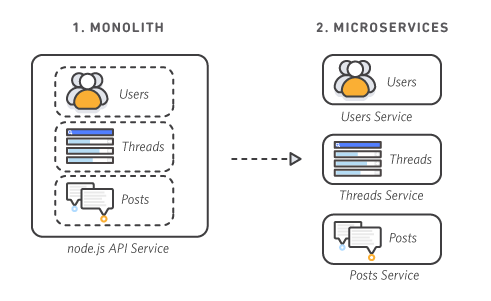
In microservice architecture on the other hand, applications are built as individual, loosely-coupled components that are deployed on their own. These communicate with each other using several lightweight APIs. Each component has its own purpose and hence in the case of increased demand for a particular component, only this particular component needs to be scaled. Moreover, these can be independently modified and updated to keep up with changing application demands.
Microservices are developed by small teams together and are exposed using standard protocols, such as a REST-ful APIs. In simple terms, each microservice interacts with the database (it is recommended that each microservice have its own database) independently to perform its functions whose results are then communicated to other microservices using these APIs.
Microservices in Action
The idea of microservices so far has been that applications are developed as modules which are deployed independently and communicate with each other to perform the various functionalities of an application. In this section we address how microservices are deployed and how containers (specifically Docker containers) aid in development.
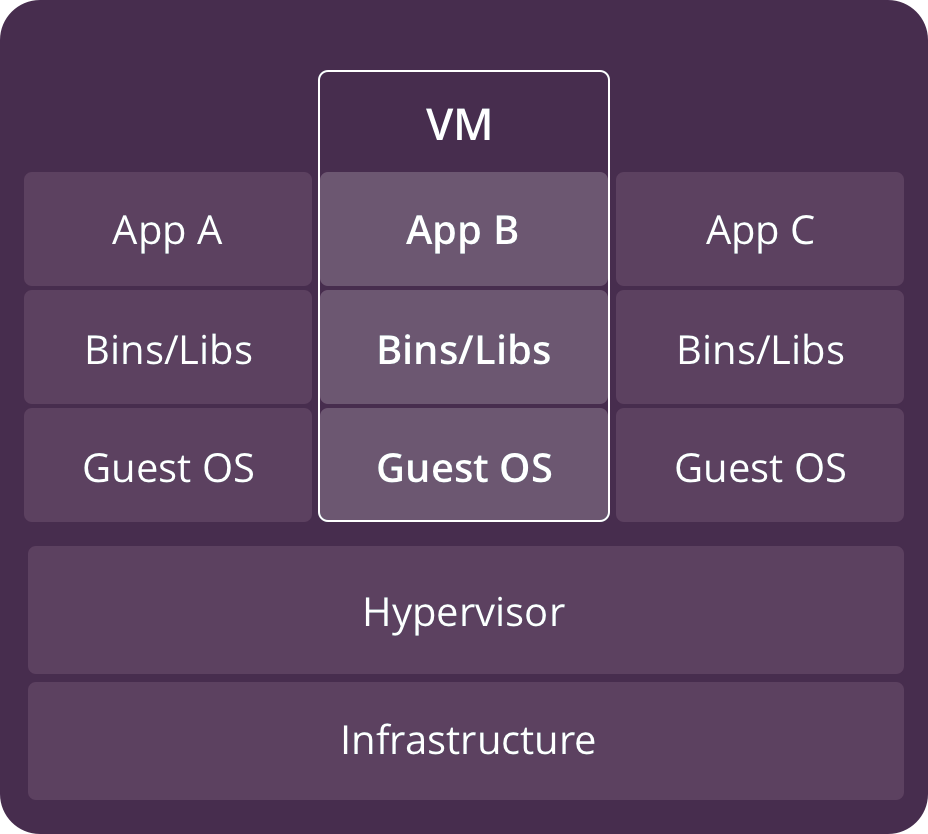
A more conventional approach would be to deploy virtual machines (VM’s) for each microservice. Virtual Machines work on the basis of hardware virtualisation, i.e. each virtual system can run its own operating system and provide a discrete environment for an application to run. We can deploy several such VM’s on a server. There exists a hypervisor which helps optimise resources and reduce the effort required to run so many operating systems individually. VM’s are capable of handling entire applications and hence deploying a VM for a small part of an application, a microservice, isn’t the best choice.
Containers, in general, are lightweight in nature and easy to deploy which makes them perfect to deploy microservices in. Containers work one level higher than VM’s i.e they work on the basis of OS virtualisation and are deployed on top of an underlying OS. Each container consists of all the necessary code and dependencies for the application to run. All containers share the operating system kernel. As a result containers are lightweight, often only some MB’s in size and can be deployed in a matter of seconds as opposed to VM’s that take minutes to boot up.
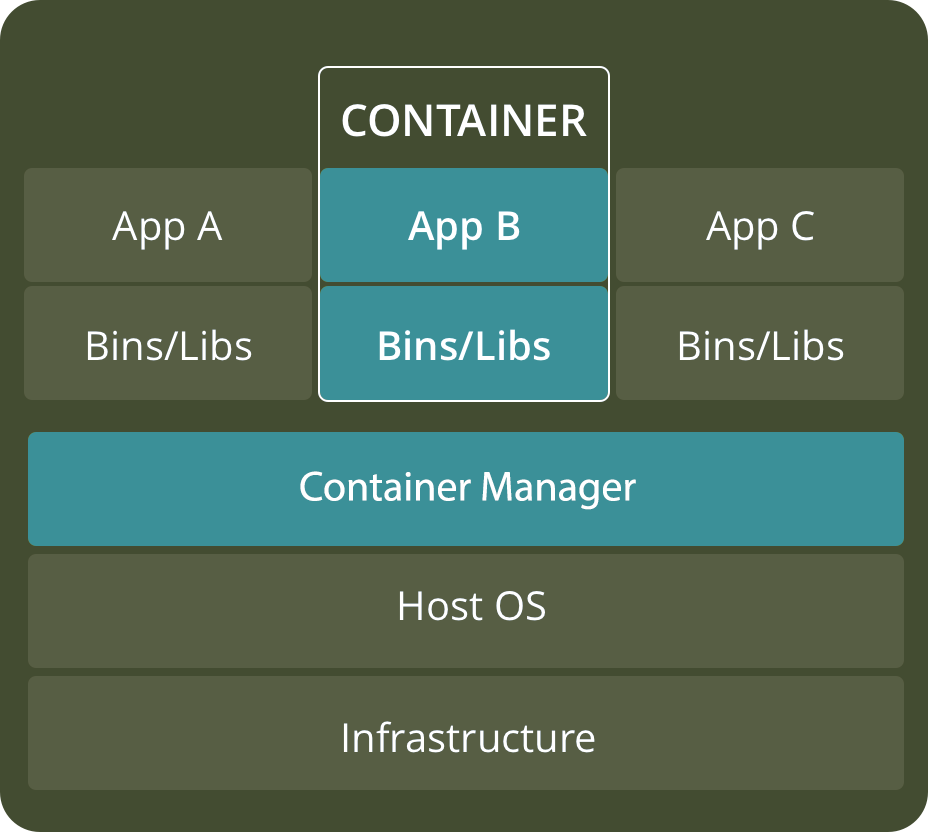
Docker containers are one of the most popular ways to deploy microservices. When using Docker containers an environment is setup with all the necessary libraries and languages and is saved in the Docker Hub. Other developers simply load this exact setup and continue working on the application. This helps overcome the various conflicts that may arise with developers working on different operating systems, using their own unique environments.
This article just covers the tip of the iceberg when it comes to microservices, there are several topics an interested reader can explore such as Docker, Kubernetes, and service-oriented architecture (SOA).
Abbreviations used in the article:
- VM – Virtual Machine
- OS – Operating System
- REST – REpresentational State Transfer
- API – Application Program Interface
– Tejas Choudhary
great issues altogether, you just received a emblem new reader.
What may you recommend about your publish that you made some days in the past? Any certain?