This piece is not one of novelty or inventiveness. This piece is meant to do one thing: to attempt to put into words the completely unoriginal and banal thoughts that pervade some of our minds. It is filled with clichéd ideas and repetitions of old concepts. Please bear with me.
Time
Many years back, in the ancient times of 11th standard, I was sitting a biology class being taught the science behind gene expression in organisms. This was when I was first introduced to the wonders of the fruit-fly (Drosophila melanogaster). The fruit-fly isn’t exceptional in any single way, you see; it just does its job perfectly. In a geneticist’s lab, that job ends up being to reproduce and die at the researcher’s behest. Fruit-flies are great at reproducing and dying. They do it at a stellar rate.
Consequently, the greatest selling point of fruit-flies is their really short life-spans. A fruit-fly can go from an egg to a little fly-corpse in less than 25 days. This obviously gives the geneticist’s research assistants sufficient time to run a few generations of flies through different genetic alterations, discover their recessive and hidden traits, and maybe even have some time left over for a short holiday at home away from the flies. So short are their life-spans, in fact, that by the time you die, several hundred generations of those flies would have come into existence, gotten a bite to eat, mated, run out of time and then followed you to the grave. That is around the number of generations between you and the men and women of the stone age.
And yet, it wasn’t this exactly that had me fascinated by the fruit-flies of my textbook. Instead, what I thought of was that little glass case that those fruit-flies sit in, passing their time and doing their thing. Especially those flies that come to life when the researcher has gone for a summer break. Even in the egg stage, a little baby fruit-fly gains certain proto-awareness and its few synapses begin to fire as it experiences what it considers stimulus. Our little fruit-fly begins to experience the world. It is, in every way, an observer that has just come into existence. The environment around it shapes it, as do its genes, and its 100,000 neurons slowly finish forming, driven by its DNA and the environs of that little box. Mr. Fly is an independent observer; he gets to observe, and affect the universe in a way that’s unique, in a different way to entity that has existed before. As he zooms around the glass container, he narrowly avoids other fruit-flies, apparent of their spatial location, and well-aware of their sexes (Fruit-flies sexes are easily distinguishable; another benefit for scientists). He mates with multiple females, and spends several days doing so.
As Mr. Fruit-fly reaches his 20th day, his neurons start losing certain synapses and weakening. His energy reserves get depleted and his mating phase is in his distant past; 5 days prior. The fruit-fly had no choice in this matter. The genes encoding his protein development have made these decisions for him. By the time the researcher returns from her splendid trip to the Andaman Islands, this observer, Mr. Fly, would have been snuffed out of existence, with the sum total of the universe’s effects on his synapses and his body slowly rotting away in pile of other dead flies at the bottom of the case. When our researcher opens the case to collect more flies to experiment on, she will never know about Mr. Fly and his antics; all that remains of Mr. Fly are the few recombination of genes he made happen as he reproduced. There Mr. Fruit-Fly came and went, in the blink of an eye in human terms.
So, you might deduce, what fascinated me about fruit-flies was not their oddity. No, what actually captures my attention about these creatures is just how similar they are to us, humans. Sure, humans can sing and dance and do differential calculus, but in our interaction with this incessantly moving fourth dimension of ours, time, we really don’t differ much from a fruit-fly. The 70 or so years that you, a completely new observer, get to experience, interact and belong to this universe, are not in any meaningful way different from the fruit-fly’s 25 days. It might be longer, but not by much; we still come and go in a flash.
This is not a new idea. Every generation has had to come to terms with this fact: your life is a blink of the cosmic eye. That doesn’t mean that to realise this is to be derivative. Each person owns the realisation of his or her own mortality, or the incredible briefness of their stint on this celestial game-show. It is with this realisation that we can delve into certain philosophical aspects of “human” time, or basically the way that we, as individuals and a society, interact with the flow of time as it engulfs us and all the choices we make.
Change
I celebrated my eighth birthday in Pizza Hut. My parents spent some time with me and then let me interact with some of the friends who had shown up. We played, ate cold pizza and drank poor quality carbonated drinks. It really felt like my day of the year again. Soon, I would be in middle section and be well on my way to doing big things. And while I was growing, everything around me had always been the same for as long as my memory could ascertain. Sure, I was told we had shifted from India, but that wasn’t dominating my thoughts. My parents were the same as they had always been, we had lived in the same house for more than half my lifetime, and my friends seemed like they had always been around. The only thing that ever changed was me. I was changing my grade. I was getting taller. I was reading more books. Obviously time was passing, but only in the sense of my personal growth. Beyond me, things didn’t possess the ability to transform.
My first real understanding of time as an entity external to me was when I was in my ninth year. We had a loss in the family, and for the first time this was someone close to me. Later that year, my baby brother came into my life. Loss and gain. The universe could devastate me and bless me in equal measure.
This arithmetic became the new way I saw time. You know, to me, if it weren’t for how common-place death and birth are, they would be the most absurd things imaginable. Not in the way that these things are weird or disgusting or even that either of them causes pain or joy. No, they are absurd simply in the level of alteration they create to our lives. To have a stalwart of your life story just go poof and disappear really messes up the timeline. Or to have a new character just magically appear and take over the arc and even become its protagonist. It is absurd and pretty arbitrary, and it can really shape how you look at time.
Nonetheless, when considering the changes that the passage of time precipitates in our lives, it isn’t just the random occurrences that dominate our imagination. There is also the concept of “Progress”. Progress, or positive semi-purposeful change, is the bread and butter of politicians, pop-scientists and other charlatans. It is the term that drives us to the most incredible innovations and the most unspeakable atrocities. And, until quite recently, it wasn’t even that firmly linked to time. If you were a peasant in the plains of the Punjab in the sixteenth century, you didn’t expect much to change in your lifetime. You hoped you had a healthy child who could cultivate your crops when you were too old to do so, and thereby take care of you. Or maybe you might have considered joining that new religion that your neighbours were talking about, that promised to save you from the invaders.
Time was an afterthought. All that mattered was choice.
Compare that to today. In the wake of the industrial revolution, technological innovation has been carried forward at a break-neck pace. And this has had a direct effect on our ideas of time. For one, the advent of accurate time-keeping and cheap-ish watches meant that time was no longer an abstract concept for the common-folk, but instead a tangible, finite resource. But a more metaphysical transformation also took place. Progress was and is seen as an outcome of the days simply passing by. If I just wait a little longer, bigger and better things are waiting for me. Somehow, progress is the given; whether we wish for it or not.
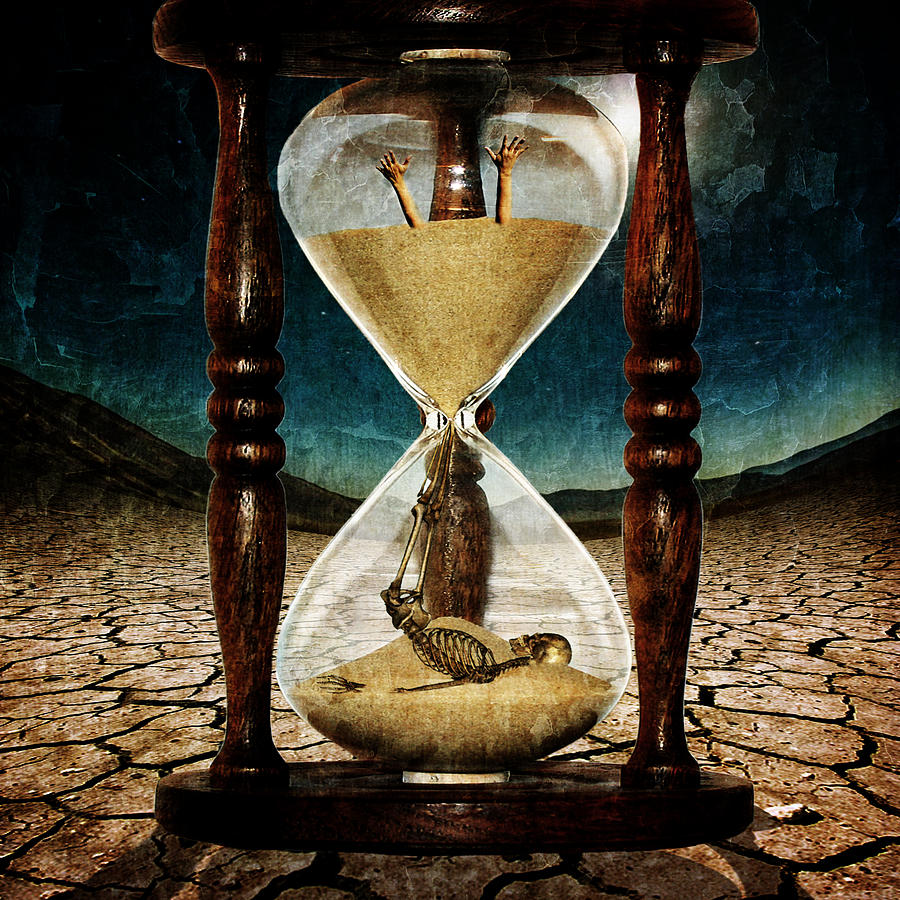
Now this entire “rant” on progress might seem to stem from some deep-seated desire to return to some golden age from the past, but this couldn’t be further from the truth. I am a big fan of the current age and the opportunities it affords me. Yet, I am a prisoner of my time. I am a child of the last decade, and am inextricably bound to it. So it seems a little disingenuous to me for anybody to speak of unqualified progress. This progress we see every day, all around us, is quite definitely an improvement to most humans alive today. Extended life-spans, nuclear fusion and the Singularity are all great achievements to science and to most humans; still, let us not confuse that with objective progress, because such a term, at least to me, is meaningless. I think that to say that we are moving in the direction that some of us want, and most of us don’t mind, would be a better way to put it.
Alas, I can’t fault anyone for loving the idea of progress. It is built into the way we look at the world on a more personal level. When I was nine, I looked forward to going to middle school and maybe playing for the cricket team. When I was in twelfth, I knew I needed to enter a good university to continue developing my passion for rockets and space. Today, I look forward to a hopefully interesting career somewhere on these shores. These were and are good ideas. They are achievable, and allow me to develop myself from stepping stone to stepping stone. At the same time, there are two major caveats. One, which binds our personal experience of progress to the societal one, is that the definition of progress in either case depends on the subject undergoing it. Just as the advent of AI waiters might not be progress to professional hotel management companies, learning Sanskrit might not mean progress in my life.
The other caveat is one that acts as the real difference between human progress and mine. I keep aiming at a point to which I want to develop, and keep expecting to do better and better things in my life for the effort to be worth it; so does humanity. Progress can be the meaning in someone’s life, and it can be the meaning for the purpose of the human race. It is the fiction that shapes choices and identities. Yet, while the humanity has much to strive for and far to go, I am a prisoner of my time. I can only do so much and for so long. It takes either active effort or conscious ignorance to reconcile these facts. As you can see, the difference for me is, everything has to end.
Decay
Catch 22 by Joseph Heller is a satirical book. It is also simultaneously, in its insolence towards the audience’s sensibilities, one of the most accurate books on the human condition I have ever read. There is a passage that goes like this:
Yossarian felt much safer inside the hospital than outside the hospital, even though he loathed the surgeon and the knife as much as he had ever loathed anyone. He could start screaming inside the hospital and people would at least come running to try to help; outside the hospital they would throw him in prison if he ever started screaming about all the things he felt everyone ought to start screaming about, or they would put him in the hospital.
I want to scream too. Not because of what has happened yet, but for all those things that could.
Decay is the “evil” twin sister of progress. It is in many ways a mirror image. If I tried to define it similarly to progress, I would call it something like a “semi-arbitrary negative change” caused by the passage of time. But unlike progress, decay has always been associated with time. Ozymandias had his kingdom turn to dust and the Arizona desert had its surface torn away from it by the Colorado river. Life too, decays.
Yet, the decay of life is different from the decay of a mountain, say. For life fights back. A friend once told me that the purpose of life is to fight against the curse of increasing entropy, and while I don’t agree completely, it’s a good way to put it. There is a certain setting that the organism attempts to hold on to.
It is this valiant fight, unfortunately, that helps define the extent of its inevitable decay. I’ll explain. When I wrote about the changes occurring to the Arizona desert as an example of decay, I was being a bit misleading. The tearing away of the soil of that region opened up the years of rock that lay underneath the surface and created the rift in the ground that we call the Grand Canyon. And I feel that it is pretty difficult to ascertain decay if we don’t have a objective baseline to base it off. The only absolute baseline that most entities in the universe can work with is entropy. By itself, the universe will move on its merry way and slowly have its overall entropy increase, while in the more local scale some systems will have their entropy decrease and favour order over disorder. For want of a better term, I’ll call this entropic increase decay, with a small “d”.
On the other hand, there are certain systems in this universe that attempt to maintain their layout. Or, maybe even attempt to progress. Life is one such system. Life fights back, but it is a fight against a raging current. If life is fighting for order, the universe inevitably prefers disorder. Luckily for life as a whole, there is a solution. Create new entities that can fight against the disorder with better tools than the previous generation. Evolution. Evolution isn’t a genius plan; it is rather a flawed control system that has managed to work against entropy until now. But while Life goes on at full strength, the living aren’t as successful. Most organisms undergo aging or senescence, as their inefficient bodies allow themselves to deteriorate to make way for the more optimized subsequent generation. Errors pop up in the mechanism that fights entropy, or the mechanism just gives up on itself. This is true decay. This is Decay.
Another system that attempts to maintain its layout is civilisation. So, to me, civilisation is another entity that can Decay. But unlike living creatures, there is no one specific configuration that a civilisation attempts to maintain. Rather, like progress, Decay of a civilisation is subjective. What Tsar Nicholas saw as the collapse of the nation, the Soviet leadership saw as the showcasing of the will of the people. Since there is no specific configuration, the Decay can’t be called absolute. But like progress, it isn’t any less real for the people who experience it.
I write this piece from my home in Oman, an oft-forgotten country in the Middle East. It is a nation that is haemorrhaging money and suffering serious fiscal shortfalls. The malls are emptying, as new ones are being developed. Petrol prices have begun to skyrocket. Oman is a beautiful country that has been put in a worrying position. And Oman is a country that I love. I remember the hope that we had as the country changed from the early 2000’s. There was hope and with it an inherent positivity. The most basic parts of my childhood were formed in those times. Today things are different. There is fear and doubt. New developments come up every day, but the tiny cracks in the prefect roads or the slightly poorer quality lawns say otherwise. The feeling of decay can shape your worldview without it even having a direct effect on your life. It doesn’t matter that to many immigrants who have just entered the country, the “Decay” is not apparent or not even true. To me, as a solitary observer, the Decay is true, and it is painful. I am a prisoner of my history.
Such is the case with Life. Sure, life will push ahead and endure. But my body will soon begin to waste away. Once the mechanisms running the show decide that I have served my purpose, they’ll begin to ease off on their effort to maintain my metabolic pipelines. I never really understood the obsession with wrinkles, but that superficial deterioration does seem to be a great indicator of the path I’m going to take.
Alongside physical decay is the mental corrosion of time. Memories fade in the passage of time, but so do skills and knowledge. For a while, this deterioration is balanced out by the addition of new entities into the brain, and new neural pathways. But then a tipping point will be reached. Beyond this point, I will never amass as much information as I will lose. Never have as many linkages created as are ripped apart. Like Roy Batty said in Blade Runner, “All those moments will be lost in time, like tears in rain”. Mental decay is all the more terrifying as it doesn’t change the tools that I have access to. It changes who I am itself. What is a person but their “soul”? That Decay is the most complete. I might be a step forward on the evolutionary ladder, but that doesn’t help me. For I am a prisoner of my body and mind.
Stories
Why then, do we persevere?
– Dhruv Warrior