Little Green Men?
Nope, extraterrestrial life may look more like pasta. Fettuccini or Capellini, Anyone?
Scientists have now discovered microbial mats in Yellowstone that look a lot similar to a bowl of delicious, chessy pasta.
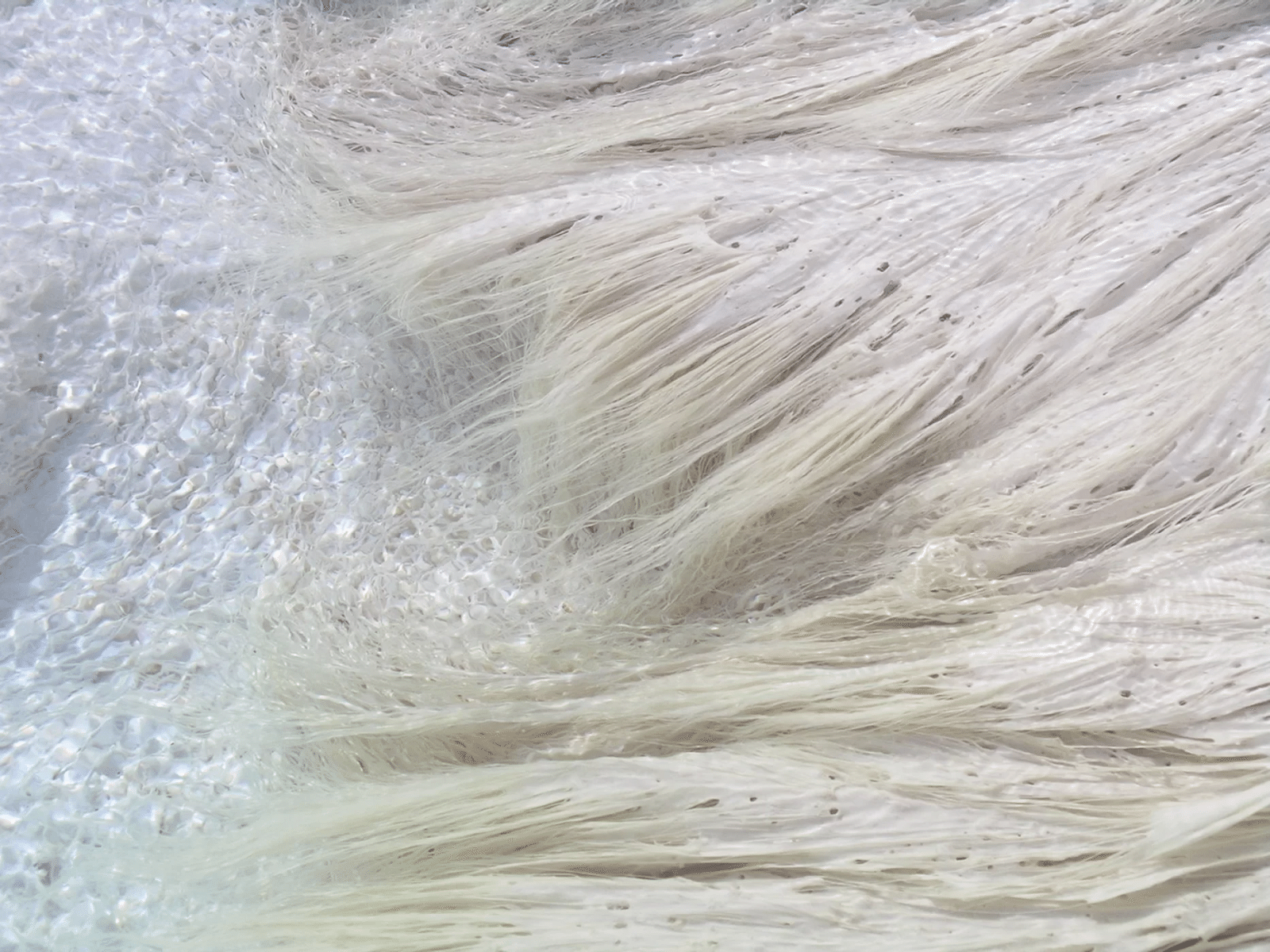
Hot-spring-loving microbes create rock formations that look like fettuccini or capellini, according to a new NASA-funded study published online April 30 in the journal Astrobiology. Such pasta-shaped formations could be the first clues to life on other planets, said study author Bruce Fouke, a geobiologist at the University of Illinois at Urbana-Champaign.
If we could go to another planet with a rover, wouldn’t we love to see living microbes or little green women and men in spacecraft? But the reality is we’re going to be looking for life that was probably growing in a hot spring, life that was fossilized.
At a popular tourist spot in the Yellowstone National Park, hot geothermal water rich in minerals flows from the ground. The minerals precipitate out of the water, creating striking formations made of calcium carbonate, also known as travertine.
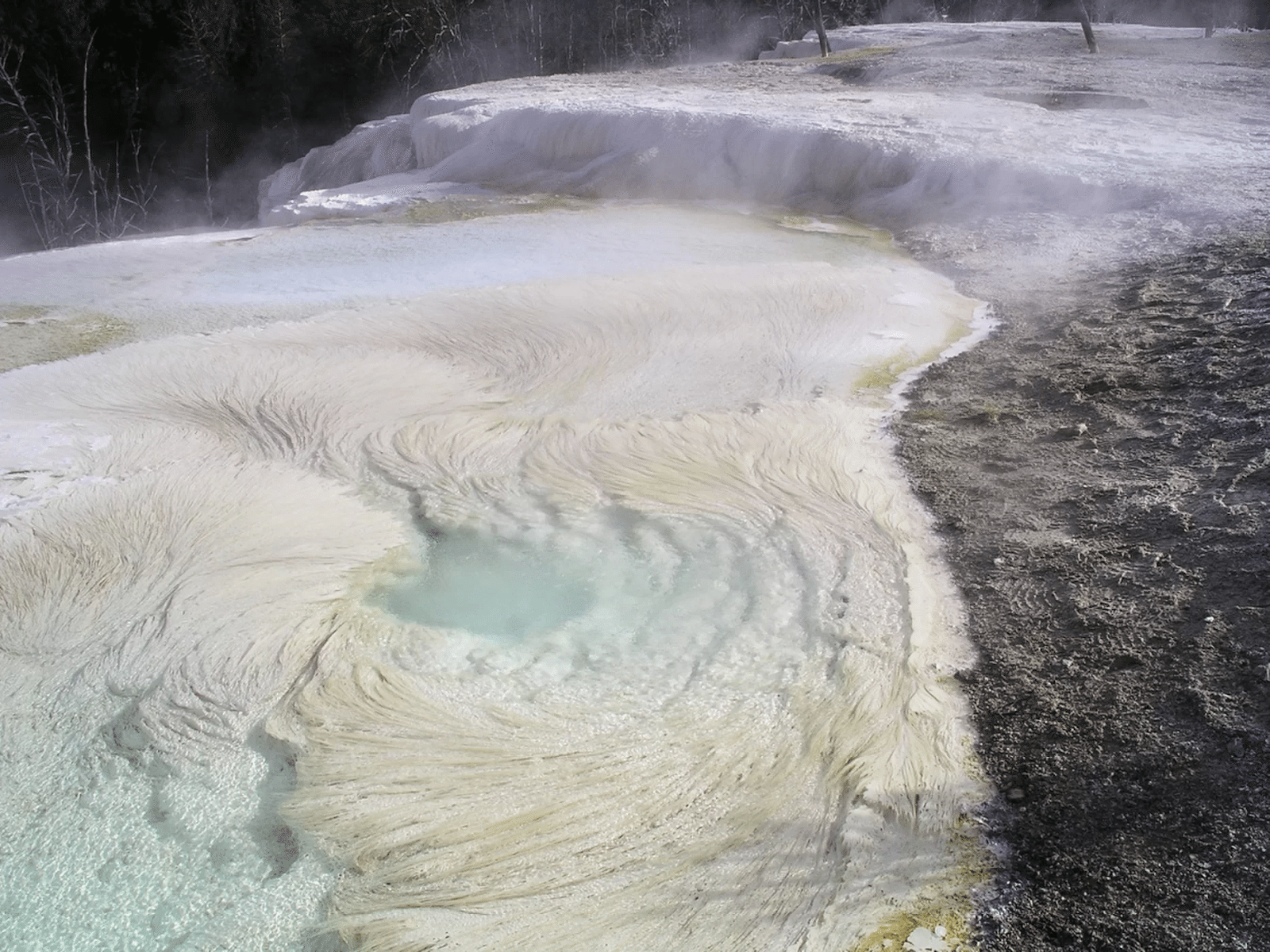
Microbes lurking in Yellowstone’s hot springs create rock formations that look very similar to pasta.
They focused on the fast-flowing, particularly hot water at the head of the mineral springs. Here, the water ranges in temperature from 149 degrees to 162 degrees Fahrenheit (65 to 72 degrees Celsius) and has a low pH of 6.2 to 6.8, meaning it’s more acidic than basic.
The mats look like long, mucus-y pasta strands. In calm waters, microbes settle out in slimy, unconsolidated mats. But in rushing water, the organisms have to cling to one another to survive. Each thread consists of trillions of microbes hanging on to each other for dear life. They discovered that 98% of the microbes living in these hot, fast-moving waters belong to a species called Sulfurihydrogenibium yellowstonense, or “sulfuri” for short.
Sulfuri is found in hot springs around the world, and lives by breaking down sulfur and using the resulting energy. The species evolved 2.5 billion years ago, when Earth’s atmosphere contained barely any oxygen. That makes sulfuri likely very similar to any life that might have existed on ancient Mars. If something like sulfuri did exist on another planet, it would have left fingerprints. In hot springs, change is a constant. Cooling geothermal waters constantly deposit minerals. But sulfuri, actively encourages this change.
Proteins on the microbes’ surfaces encourage the growth of calcium-carbonate crystals. Thus, the travertine that forms in the presence of sulfuri at Mammoth Hot Springs grows a billion times faster than travertine in other environments.
It’s an instant microbial fossil factory.
Sulfuri survives by growing just a little bit faster than the minerals that get deposited around it. What’s more, it uses the pasta-shaped rock to survive. Filaments of the microbes attach to the ridges formed by their fossilized compatriots, which boosts the microbes into very shallow water that contains the low levels of oxygen the microbes need to survive. (They die without oxygen, but they also die if exposed to the level of oxygen in air.)
Though any extraterrestrial microbe living in hot springs on another world would be a different species than sulfuri, it would probably have a similar lifestyle, — it would have to, given the limited number of ways to make life work in such an extreme environment. Thus, the protein and genetic analyses done by the team would provide a benchmark for an alien comparison, should some future rover pick up a pasta-looking rock on a far-flung planet.
That means now, for the first time, when we have a rock that is fettuccini-looking travertine, if that rock is collected and analyzed on Mars, we have the full suite of these extremely cutting-edge analyses for the microbes.
– Shipica Uddagiri