With the ever-increasing demand of electrical energy every one is looking towards Sun as a source of electrical energy along with its role as an important source of thermal energy. At the heart of all photovoltaic devices are two separate layers of materials, one with an abundance of electrons those functions as a “negative pole,” and one with an abundance of electron holes (vacant, positively-charged energy spaces) that functions as a “positive pole”. When photons from the sun or some other light source are absorbed, their energy is transferred to the extra electrons in the negative pole, causing them to flow to the positive pole and creating new holes that start flowing to the negative pole, thus producing electrical current which can then be used to power other devices.

Conventional semiconductor solar cells are made of polycrystalline silicon or, in the case of the highest efficiency ones, crystalline gallium arsenide. The use of these devices has been limited to date because production costs are so high. Even the fabrication of the simplest semiconductor cell is a complex process that has to take place under exactly controlled conditions, such as high vacuum and temperatures between 400 to 1,400 degrees Celsius. Normal solar panels are rigid (shown in Figure ), expensive, and their size is constrained by manufacturing techniques thus, limits their scalability to large area panels and also only 35% of the suns total energy falling on it could be efficiently used and this is not so favorable on cloudy days, thus creating a problem.

Polymers offer the advantage of solution processing at room temperature, which is cheaper and allows for using fully flexible substrates, such as plastics. Thus, replacing the silicon with polymer nanowires would make the solar cell much lighter, and eventually cheaper. The technology takes advantage of recent advances in nanotechnology, specifically the production of nanocrystals and nanorods as shown below. These are chemically pure clusters of 100 to 100,000 atoms with dimensions on the order of a nanometer, or a billionth of a meter.
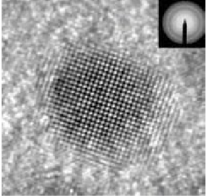
Because of their small size, they exhibit unusual and interesting properties governed by quantum mechanics, such as the absorption of different colors of light depending upon their size. We can manufacture nanorods in a beaker containing cadmium selenide, aiming for rods of a diameter – 7 nanometers — to absorb as much sunlight as possible. They also aim for nanorods as long as possible – in this case, 60 nanometers. It will play an important role in developing an improved polymer solar cell using nanomaterial additives by combining nanotechnology with plastic electronics.
Designing
The plastic solar cell designed is actually a hybrid, comprised of tiny nanorods dispersed in an organic polymer or plastic. Figure below shows a schematic diagram of a hybrid “plastic” solar cell with a nanorod/polymer layer sandwiched between two electrodes.

A panel of eight plastic solar cells based on inorganic nanorods and semi conducting polymers. The shiny ovals are the aluminum back electrodes of the individual solar cells. The middle layer, a mere 200 nanometers thick, is a jumble of nanorods embedded in the semi conducting polymer.
Nanorods are mixed with a plastic semiconductor, called P3HT – poly- (3-hexylthiophene) – and coated a transparent electrode with the mixture. The thickness, 200 nanometers – a thousandth the thickness of a human hair – is a factor of 10 less than the micron-thickness of semiconductor solar cells. When nanorods absorb light of a specific wavelength, they generate an electron plus an electron hole – a vacancy in the crystal that moves around just like an electron.
The electron travels the length of the rod until the aluminum electrode collects it. Thus, an aluminum coating as shown in figure 4 acting as the back electrode complete the device. The hole is transferred to the plastic, which is known as a hole-carrier, and conveyed to the electrode, creating a current.
Applications
- Plastic formulations also open the possibility of printing solar cells onto various surfaces, much as ink is printed on a newspaper.
- lightweight and flexible plastic solar cell painted on the back of it could power portable electronics equipments like PDAS, laptops and pocket calculators etc. anywhere we can access solar energy.
- The new cells also open up possibilities for wearable computing devices. .0Functions of plastic solar cell similar in visible region are needed in the infrared region for many imaging applications in the medical field and for fiber optic communications.
- Ultra high efficient plastic solar cells are expected to work well in low-light conditions and under artificial light along with the increased wavelength region.
- A big attraction of dye-based PVs. is that they can be colored and even patterned to resemble normal roofing material or military camouflage. The US military appears to agree, having already placed orders for PV material as part of on-going development programmers with army, navy, air-force and Marine Corps.
Conclusion: Harnessing of Non-Conventional energies is a human necessity. At the same time the solar energy at present we are tapping with the silicon cells. These cells at present they have not yet reached the economical feasibility. Hence the concept and developing a plastic solar cell would account to the economical feasibility and mass usage
-Nithin R