Life on Earth as we currently know it, is unimaginable without electronic devices, and electricity in general. Nearly every single sphere of activity is dependent on electronics and so, it is only natural that space exploration and the field of aerospace in general, rely on electronics and electronic devices.
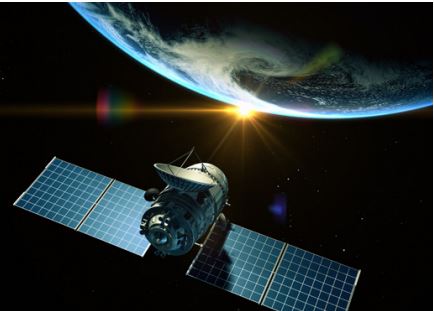
As humans aim to ramp up their presence in space, by first exploring other places in the solar system and in the future perhaps even beyond that, they will require more and more instrumentation and life-support systems that rely heavily on electronics. However, using electronics in space, as well as getting them there to begin with, are not without their challenges and threats.
Space electronics have to overcome the vibration of the launch vehicle. The demands placed on a rocket and its payload during launch are severe. Rocket launchers generate extreme noise and vibration. Thousands of things can go wrong and result in catastrophic failure. When a satellite separates from the rocket in space, large shocks occur in the satellite’s body structure. Pyrotechnic shock is the dynamic structural shock that occurs when an explosion occurs on a structure. Exposure to this can damage circuit boards, short electrical components, or cause all sorts of other issues.
Another concern that does not immediately come to mind when thinking of electronics in space is that of outgassing. Plastic materials contain volatile material which under the low to nil atmospheric pressure in space, come out as vapour and often may deposit on equipment, causing problems. This issue is solved by using ceramic and other materials and avoiding plastic and other materials that outgas.
Component redundancy also helps space missions survive contact with sudden short bursts of high energy particles, by ensuring that there is a backup for crucial tasks and functionalities of the spacecraft and that these tasks are not entirely dependent on just one computer.
The radiation effects on electronic devices are a primary concern for space-level applications. NASA tests all equipment headed to space by exposing it to radiation. The testing depends on where the spacecraft is headed, and different locations in the solar system demand different types and levels of shielding. There are two main radiation threats in the solar system: solar wind radiation and cosmic rays that originate far away and travel to the solar system.
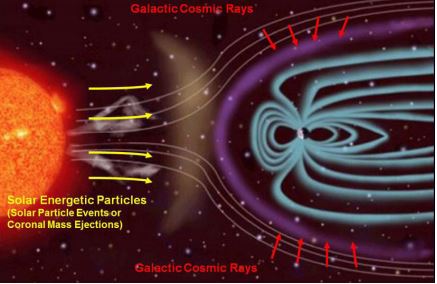
The natural space radiation environment can damage electronic devices and the effects range from degradation in parametric performance to a complete functional failure. These effects can result in reduced mission lifetimes and major satellite system failures. Layered aluminium or titanium slows down energetic particles and prevents them from damaging the circuitry. After their tests, engineers make specific recommendations for shielding if the environment demands it. Shielding adds bulk and weight, which raises fuel needs or costs, so engineers always prefer to use the least amount possible.
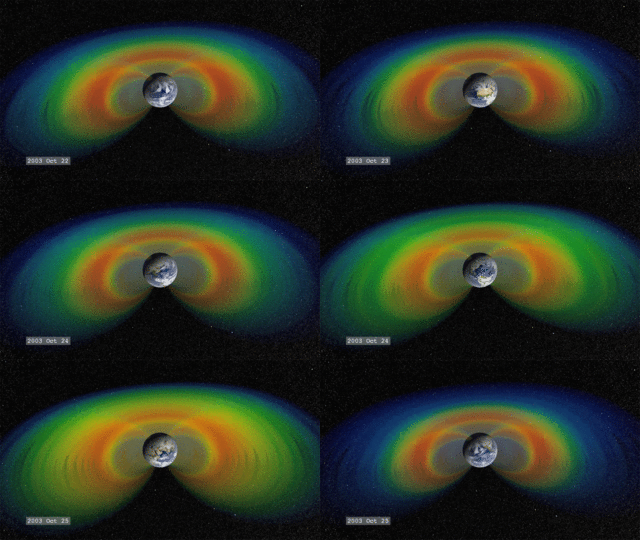
(The Earth’s magnetic field creates a belt of radiation known as the Van Allen radiation belts, and the Hubble Space Telescope preemptively turns off its instruments when passing through them)
Space also witnesses extreme temperature changes, from as low as -55 degrees celsius to as high as 120 degrees, a range not seen while operating these devices on Earth. Hence electronic devices have to be guarded against these extreme temperature swings as well and using gallium nitride and zinc oxide instead of silicon has shown to guard against temperature swings due to stronger bonds.
So, in conclusion, while humans have figured out ways to fight the radiation problem in space and have largely been able to save their electronic devices from the harsh space environment, as we step up our exploration and send spacecraft to new destinations, we will have to innovate and come up with new ways to insulate humans and electronics alike from radiation. As with all things scientific, this remains a work in progress.
– By Udbhav Sinha, Third Year Department of Electrical and Electronics Engineering